
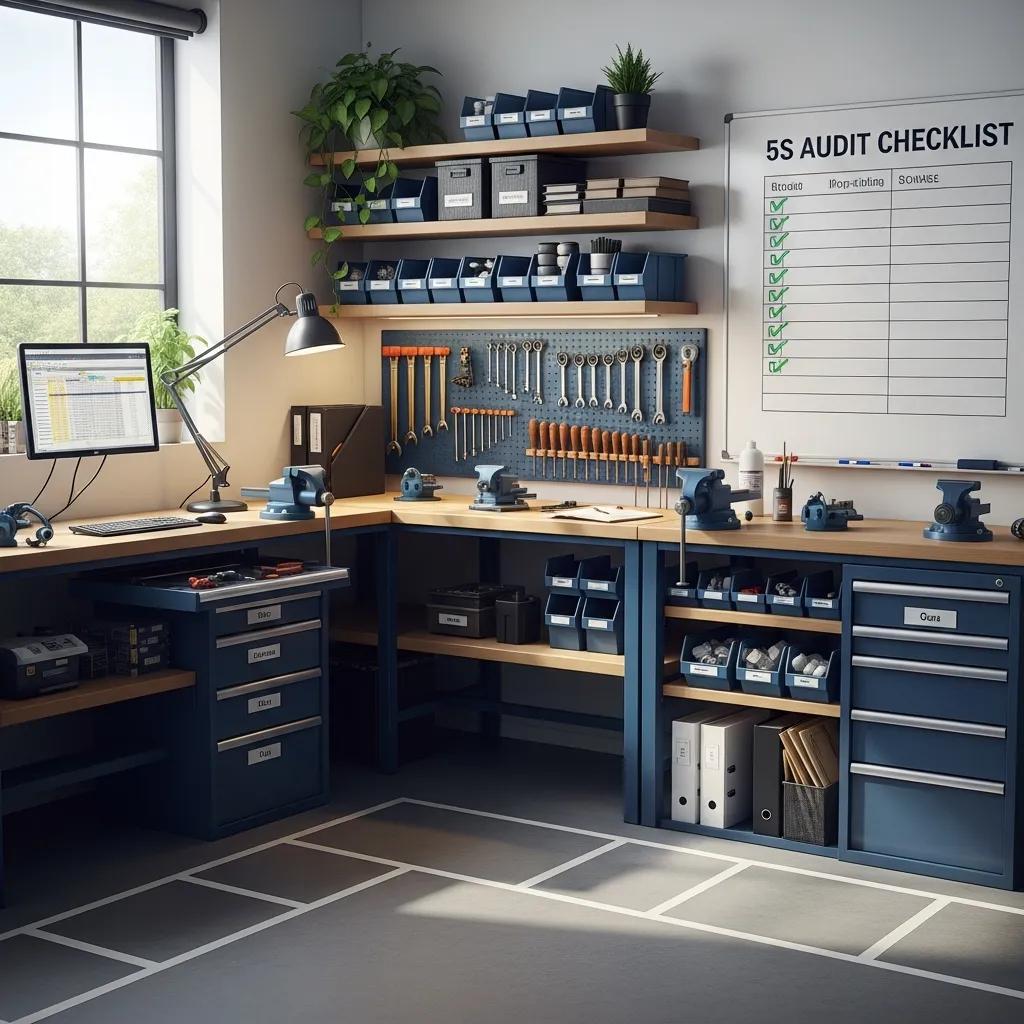
Die 5S-Methode: Ordnung und ISO 9001 für mehr Effizienz
The 5S Method is a structured approach to workplace organization—Sort, Set in Order, Shine, Standardize and Sustain—that creates visible order and measurable cleanliness to support operational control and ISO 9001 readiness. This article explains how the 5S methodology (5S Methode) works, why Ordnung und Sauberkeit matter for a robust quality management system (QMS), and how organizations can implement 5S in ways that generate audit evidence and continuous improvement. Readers will learn core definitions, practical examples for manufacturing and knowledge work, specific mappings to ISO 9001 clauses, a step-by-step implementation roadmap, and sustainment strategies that preserve gains over time. The guide includes checklists, EAV-style tables linking 5S practices to audit evidence, and implementation deliverables to prepare teams for internal and external audits. By the end you will have actionable 5S checklists and an understanding of how 5S improvements feed directly into ISO 9001 certification efforts and organizational competitiveness.
What Are the Core Principles of the 5S Method?
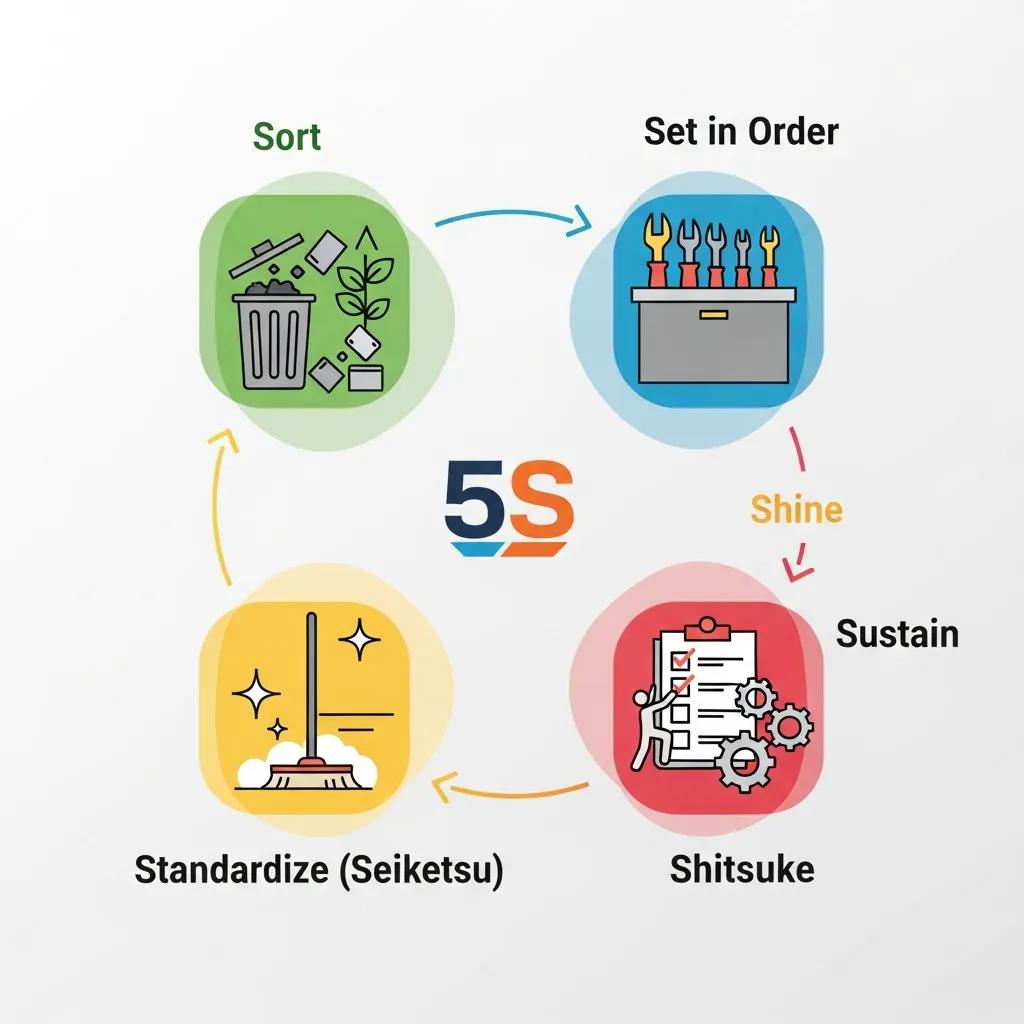
The 5S Method comprises five interrelated practices that organize work for clarity, flow and waste reduction: Sort (Seiri) removes unneeded items; Set in Order (Seiton) arranges tools for efficient use; Shine (Seiso) cleans and inspects; Standardize (Seiketsu) codifies best practices; Sustain (Shitsuke) establishes discipline and review routines. Mechanically, these steps reduce motion, waiting and defects by creating predictable workspaces and visual controls, improving both productivity and safety. The first paragraph below introduces each S concisely so teams can act immediately with simple checklists and visual cues. Understanding these core principles sets the stage for how each step contributes to consistent workplace organization and supports ISO 9001 evidence gathering.
Further emphasizing the foundational aspects of this methodology, external sources also highlight the core components and expected outcomes of 5S.
Defining 5S Method: Sort, Set in Order, Shine, Standardize, Sustain
One of the possible tools is 5S. This tool is usually the key component of Visual Factory Management and a part of Kaizen approach-a system of continuous improvement. 5S focuses on establishing and maintaining a visual order, organization, tidiness, standardization and sustainability. 5S is applied through 5 phases which can be translated from the Japanese as „sort“, „set in order“, „shine“, „standardize“ and „sustain“ giving the method its name. Expected results are improved efficiency, service and safety thus better profitability.
5
S-improving operational efficiency, A Erceg, 2017
The five core principles and brief examples follow in a quick-reference list to help teams prioritize immediate actions and plan a pilot area.
- Sort (Seiri): Remove unnecessary items from the workspace to reduce clutter and eliminate searching time.
- Set in Order (Seiton): Arrange remaining items logically with labels and shadow boards for fast retrieval.
- Shine (Seiso): Clean and inspect equipment regularly to detect abnormalities early.
- Standardize (Seiketsu): Create visual procedures and checklists so work is consistent across shifts.
- Sustain (Shitsuke): Implement routine audits and training to embed 5S into daily behavior.
These principles provide immediate improvement opportunities; the next subsection explains how each S produces measurable organizational effects and gives manufacturing and IT examples for rapid adoption.
How Does Each 5S Step Contribute to Workplace Organization?
Each S reduces specific forms of waste and creates observable controls: Sort eliminates excess inventory and reduces motion; Set in Order shortens search and retrieval time; Shine enables early detection of equipment faults; Standardize reduces variability between operators; Sustain ensures improvements persist through audits. In a manufacturing cell, sorting obsolete fixtures reduces changeover time; in an IT team, setting order might mean standardized folder structures and cable labeling that cut troubleshooting time. Expected outcomes include reduced cycle time, fewer lost tools, and faster incident detection; these outcomes can be measured via search-time surveys, downtime logs and defect counts. The operational mechanisms align with lean manufacturing as a hypernym, while checklists and audit logs act as meronyms—parts that create a coherent QMS. This mapping leads naturally into the semantic alignment between 5S practices and ISO 9001 clauses discussed next.
What Are Synonyms and Related Terms for the 5S Method?
The 5S Method is often referenced using related terms such as workplace organization, lean housekeeping, visual management and operational housekeeping; regional variations include „5S Methode“ in German contexts. Related methodologies include Lean manufacturing and broader Quality management practices that use standard work, kaizen and visual controls as complementary tools. For SEO and internal linking, key alternative phrases to use are , , and . Understanding these lexical relations helps teams position 5S as a targeted meronym within larger quality initiatives and ensures content and training use consistent terminology across departments. Recognizing these synonyms prepares stakeholders for consistent language during audits and management review sessions.
How Does the 5S Method Support ISO 9001 Compliance?
5S supports ISO 9001 compliance by producing organized, controlled processes and tangible records that serve as audit evidence for operational planning, resource management and process performance. Mechanistically, 5S creates standard work, inspection logs and visual controls that demonstrate controlled conditions and continual improvement—requirements central to ISO 9001’s QMS framework. The table below maps 5S practices to ISO 9001 clauses and the types of evidence auditors typically expect, making it easier for teams to prepare targeted documentation and demonstrations during audits.
The following mapping clarifies how routine 5S outputs meet specific ISO expectations:
| 5S Practice | ISO 9001 Clause/Requirement | How 5S Provides Evidence |
|---|---|---|
| Sort (Seiri) | Clause 8.5.1 Operational Control & Clause 7.1.3 Infrastructure | Removal logs, inventory rationalization records, reduced obsolete items list |
| Set in Order (Seiton) | Clause 7.1.3 Infrastructure and Work Environment | Visual layouts, tool shadow boards, location markings and retrieval time metrics |
| Shine (Seiso) | Clause 9.1.1 Monitoring, Measurement and Analysis | Cleaning schedules, inspection checklists, maintenance logs and condition photos |
| Standardize (Seiketsu) | Clause 7.5 Documented Information & Clause 8.5.1 Process Control | Standard operating procedures (SOPs), visual work instructions, training records |
| Sustain (Shitsuke) | Clause 10.3 Continual Improvement and Clause 9.2 Internal Audit | Audit schedules, nonconformity records, corrective action reports and KPI trends |
This EAV-style table shows how everyday 5S artifacts can be presented as objective evidence during certification or surveillance audits. The next subsection lists specific clauses and gives documentation examples auditors look for.
Which ISO 9001 Clauses Align with 5S Principles?
Several ISO 9001 clauses align directly with 5S outputs, including clauses on operational planning and control (8.5), infrastructure (7.1.3), documented information (7.5) and monitoring, measurement, analysis and evaluation (9.1). For operational control, 5S provides standard work and process maps; for infrastructure, it provides layout plans and maintenance logs; for documented information, it supplies SOPs, checklists and training records. Auditors typically expect time-stamped inspection logs, photographic before-and-after evidence, and records of corrective actions tied to 5S audits. Creating consistent file-naming conventions and retention policies for these artifacts improves traceability. These clause mappings make 5S not only a productivity tool but a source of structured audit evidence for ISO 9001 compliance.
How Does 5S Enhance Quality Management Systems?
5S enhances a QMS by reducing variability, improving process repeatability and feeding continuous improvement cycles with routine observations and metrics. When teams standardize tasks and capture deviations through Shine inspections and Sustain audits, management gains reliable inputs for corrective actions and management review. Typical outcomes include fewer nonconformities, faster root-cause analysis and clearer KPIs for process performance. Recent studies and contemporary practice show that integrating visual management and standardized work amplifies management oversight and lowers defect rates, which in turn supports supplier and customer requirements. This systemic benefit naturally leads into practical benefit quantification in the next section.
What Are the Benefits of Implementing 5S in the Workplace?
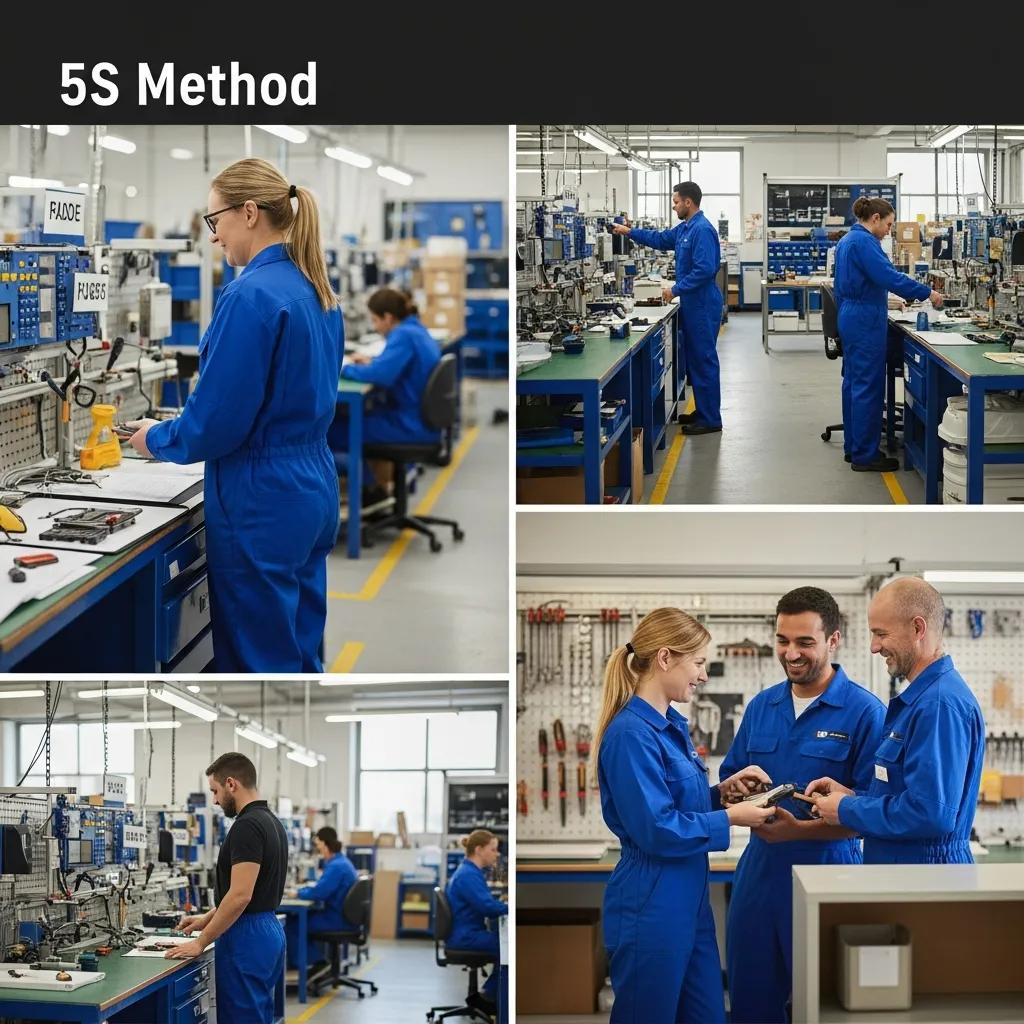
Implementing 5S delivers both tangible and intangible benefits: measurable efficiency gains, improved safety, higher quality and better employee engagement. At the operational level, teams experience shorter search times, clearer materials flow and fewer interruptions; culturally, visible order reduces frustration and promotes ownership. The table below summarizes key benefits with practical metrics or example impacts so organizations can prioritize pilot goals and measure ROI from 5S initiatives.
The benefits table provides examples of measurable outcomes organizations commonly achieve:
| Benefit | Metric / Outcome | Typical Impact / Example |
|---|---|---|
| Efficiency | Reduced search time | 20–50% reduction in tool search time in pilot zones |
| Safety | Fewer incidents | Fewer trip hazards and lower minor injury reports |
| Quality | Reduced defects | Lower rework rates due to standardized setups |
| Morale | Employee engagement scores | Improved survey scores and reduced turnover intent |
This EAV table helps teams select KPIs for pilot evaluation and communicate value to leadership. The next subsections break down how these benefits are realized in day-to-day operations.
How Does 5S Improve Operational Efficiency and Safety?
5S improves operational efficiency by making necessary items visible and accessible, cutting motion and delay; it enhances safety by eliminating hazards and establishing inspection routines that catch risks early. Practical KPIs include search time per task, mean time to repair, first-pass yield and incident frequency rate. For example, reorganizing a tool crib under Set in Order often reduces average retrieval time by measurable percentages, while Shine inspections can reveal worn components before they cause downtime. Suggested quick wins include labeling high-use items and instituting a daily 5–10 minute area sweep; these actions produce immediate, trackable improvements. These operational gains naturally strengthen employee morale and reduce waste categories discussed next.
What Impact Does 5S Have on Employee Morale and Waste Reduction?
5S reduces common waste types—motion, waiting, defects and overproduction—while also improving employee morale by clarifying responsibilities and reducing daily friction. When workers see cleaner, safer environments and predictable procedures, job satisfaction and ownership rise, reflected in engagement surveys and retention metrics. Measuring morale impact can include short pulse surveys, suggestions per employee and observed adherence to standards; measuring waste reduction can use time studies and defect tracking. Anecdotally, teams that sustain 5S report fewer daily interruptions and greater pride in their workspace, which in turn feeds continuous improvement behaviors. This behavioral shift is essential before formalizing 5S deliverables for certification preparation.
How Can Businesses Effectively Implement the 5S Method?
Effective 5S implementation follows a structured roadmap—plan, pilot, roll out, audit and improve—aligned with roles, timelines and documentation that an ISO 9001 audit will expect. Practically, successful efforts start with leadership commitment, clear scope definition, pilot area selection and a communications plan that includes training and visual standards. The numbered roadmap below guides teams through prioritized steps and the table afterwards explains deliverables and required documentation to demonstrate audit readiness. Planning these activities ensures the implementation produces both operational gains and documentary evidence for the QMS.
The implementation roadmap below gives a clear, actionable sequence for teams preparing for ISO 9001 readiness.
- Plan: Define scope, stakeholders, success metrics and pilot area; secure leadership support.
- Train & Pilot: Conduct focused training and run a short pilot to validate standards and measures.
- Roll Out: Scale by zones with documented standard work, visual controls and inspection schedules.
- Audit & Improve: Use internal audits and KPI reviews to identify corrective actions and refine standards.
After rollout, the following table clarifies deliverables and documents that should be produced and retained for audit purposes.
| Phase | Action | Deliverable / Document |
|---|---|---|
| Plan | Define scope and metrics | Project charter, stakeholder list, KPI baseline |
| Pilot | Implement and measure | Pilot checklist, before/after photos, time studies |
| Roll Out | Standardize across zones | SOPs, visual controls, training records |
| Audit | Verify sustainment | Internal audit reports, corrective action records |
These structured deliverables create traceable evidence for auditors and enable management review inputs. The next subsection gives more granular step-by-step actions that teams can follow during execution.
Stratlane Certification Deutschland, an accredited certification body specializing in ISO standards, can assess post-implementation readiness and verify QMS improvements through experienced auditors and AI-assisted audit tools, providing third-party validation once your 5S program produces consistent records and KPIs.
What Are the Step-by-Step Guidelines for 5S Implementation?
Step-by-step, begin with scoping and stakeholder alignment, then run a short pilot in a high-impact area to prove concepts and collect baseline metrics. During the pilot, apply the Sort–Set in Order–Shine sequence, document outcomes with photos and time studies, and refine standard work before wider rollout. Training should be role-based and supported by simple checklists and visual aids; designate 5S champions for each zone to maintain momentum. After rollout, schedule regular 5S audits and link findings to corrective action processes so lessons feed back into standardization activities. These practical steps create a disciplined sequence that builds both operational improvements and the documented evidence required for ISO 9001 readiness.
How Should 5S Be Documented for ISO 9001 Audit Readiness?
Document 5S using concise, time-stamped records: SOPs for tasks, zone checklists, training logs, inspection photos and internal audit reports. Adopt a simple naming convention (e.g., area_date_activity) and centralize records in the QMS repository so auditors can trace actions to dates and responsible persons. Retain baseline metrics and improvement graphs to show trend data during management reviews. Presenting before/after photos with linked checklists and corrective action entries gives auditors clear, objective evidence of sustained control. Establishing these documentation habits during rollout ensures 5S contributes directly to your ISO 9001 documentation portfolio and reduces surprises during certification assessments.
How Can Organizations Sustain 5S Practices for Long-Term Success?
Sustaining 5S requires governance—assigned ownership, routine audits, visual management and an established cadence for training and KPI review—so improvements become embedded routines rather than one-time projects. Structurally, a sustainment model couples daily operator checks with periodic internal audits and management reviews that use 5S metrics as inputs to corrective actions and continuous improvement cycles. Visual controls and standard work act as persistent reminders of expectations, while audits and corrective actions provide the feedback loop. The following subsection lists practical strategies to embed continuous improvement rituals and standardization across teams.
A durable sustainment system ensures 5S practices continue to generate audit evidence and operational value, which in turn supports ongoing ISO 9001 compliance and continual improvement obligations.
What Strategies Support Continuous Improvement and Standardization?
Effective sustainment combines routine audits, Gemba walks, visual controls, training refreshers and a corrective action process to close gaps identified in 5S checks. Example rituals include daily 5–10 minute area checks by operators, weekly supervisor reviews, and monthly internal audits with documented corrective actions and follow-up. Visual controls such as floor markings, tool shadow boards and status boards make deviations obvious and rapid to correct. Standardization is reinforced through concise SOPs and refresher training tied to KPI performance; these tools create a cultural loop where improvements are visible and rewarded. Embedding these practices ensures that 5S evolves from a project into the organizational operating model.
How Does Sustaining 5S Ensure Ongoing ISO 9001 Compliance?
Sustained 5S produces recurring, time-stamped evidence—inspection logs, audit reports and KPI trends—that demonstrates ongoing operational control, which auditors interpret as active management of the QMS. When nonconformities are addressed through documented corrective actions and results are reviewed in management meetings, organizations meet ISO 9001 expectations for continual improvement and effectiveness. Regularly refreshed training records and standardized documentation also fulfill clauses on competence and documented information. Maintaining these sustainment activities reduces the likelihood of repeat nonconformities and supplies management review with concrete inputs, linking daily order and cleanliness directly to certification maintenance.
Stratlane Certification Deutschland’s auditors combine domain experience and AI-enabled audit tools to evaluate sustainment artifacts efficiently, helping organizations validate that 5S routines are producing consistent audit evidence across sites.
Why Is ISO 9001 Certification Essential for Key Clients and Businesses?
ISO 9001 certification is often a baseline requirement in procurement and a strong credibility signal that organizations manage quality systematically, reducing risk for clients and unlocking market access. Certification demonstrates that an organization has formalized processes, measurable KPIs and an effective corrective action system—all features that buyers, partners and regulators may require. From an ROI perspective, certification can shorten sales cycles, remove procurement barriers and provide a competitive credential in tender processes. The subsections that follow explain how certification affects market access and detail competitive advantages that justify certification investment.
Decision-makers should consider ISO 9001 not as a bureaucratic burden but as a strategic asset that signals operational reliability and supports growth in regulated or quality-sensitive markets.
How Does Certification Enhance Market Access and Credibility?
ISO 9001 certification enhances market access by meeting procurement prerequisites and signaling third-party assurance to clients who require standardized quality controls. In IT procurement and supply chain contexts, certification increases eligibility for tenders and reduces vendor risk assessments because auditors have verified process control and document management. The credential also functions as a trust signal that can shorten client due diligence and create a smoother onboarding path in supply relationships. These procurement advantages often translate directly into an expanded pipeline and better positioning during contract negotiations.
What Competitive Advantages Does ISO 9001 Provide?
ISO 9001 delivers competitive advantages including improved operational consistency, clearer performance metrics and demonstrable customer focus that often lead to higher satisfaction and retention. Organizations with effective QMSs experience fewer defects, faster corrective action cycles and improved supplier relationships—factors that reduce total cost of ownership for clients. Certification can also differentiate providers in crowded markets where buyers use third-party assurance as a filter for vendor selection. The combined effect of reliability, measurable improvement and procurement access builds both top-line opportunity and risk mitigation.
For organizations ready to validate their 5S-driven QMS improvements and plan certification, Stratlane Certification Deutschland offers accredited ISO 9001 assessment services and tailored audit planning; contact them to discuss how certification can verify your operational gains and support market access from a Germany-based assessment perspective. Their accredited auditors and AI-assisted audit methods help translate 5S artifacts into efficient certification evidence.